Knowing How to Read a Nutrition Label Is a Basic Health Skill
Knowing how to read a nutrition label is one of the most practical health skills you can develop. Every packaged food you buy comes with this information. Most people glance at it. A few people ignore it entirely. Almost nobody uses it properly.
This guide changes that. By the time you finish reading, you will know exactly what every section of a nutrition label means, what to look for, and what to avoid. Your shopping trolley will never be the same.
Understanding Serving Size
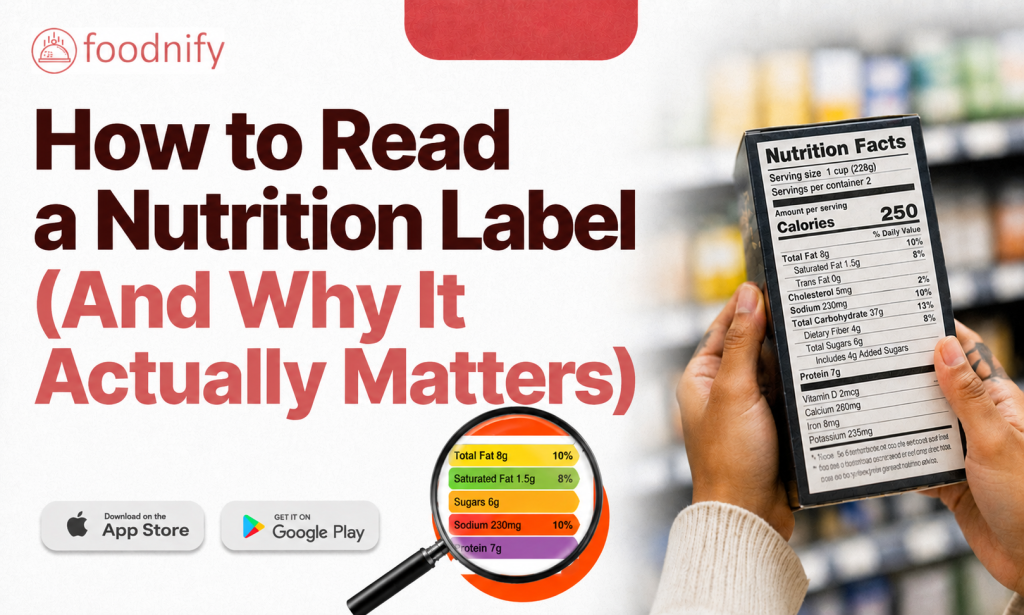
The serving size is the first thing you look at on any nutrition label. Every single number on that label — calories, fat, protein, sugar — is based on one serving, not the whole product.
This is where most people get confused. A pack of biscuits might say 120 calories. But the serving size is three biscuits, and the pack contains ten. If you eat the whole pack, you have consumed 400 calories, not 120.
Always check the serving size first. Then ask yourself honestly: how much of this will I actually eat?
Calories and Macronutrients
After serving size, the calories per serving is the most important number. It tells you the total energy in one serving of that food.
Directly below calories, you will find the three macronutrients: total fat, total carbohydrates, and protein. These are the building blocks of food. Fat provides 9 calories per gram. Carbohydrates and protein each provide 4 calories per gram.
For weight management, balancing these three macronutrients is more important than obsessing over calories alone. According to the FDA’s nutrition facts guide, understanding the balance of macros helps you make food choices that align with your specific health goals.
Track your macros using Foodnify’s calorie tracker, which helps you monitor your daily nutritional intake against your personal targets.
Sugar and Sodium: Two Numbers Most People Miss
Hidden inside the carbohydrates section is the sugar number. This tells you how much sugar is in one serving. Anything above 12g of sugar per serving for a non-dessert food is a red flag. Many packaged Nigerian drinks and snacks carry between 30g and 45g of sugar per serving. That is dangerous territory for your blood sugar and your weight.
Sodium is equally important. High sodium intake increases blood pressure. Many processed Nigerian foods and seasonings contain excessive sodium. A daily limit of 2300mg is recommended for healthy adults. One serving of some packaged soups or noodles can use up more than half that budget.
The Ingredients List: What You Should Really Check
The ingredients list is separate from the nutrition table but equally important. Ingredients are listed in descending order by weight. The first ingredient is what the product contains most of.
If the first three ingredients of your “healthy” breakfast cereal are sugar, refined flour, and corn syrup, the product is not healthy regardless of what the front of the pack claims.
Avoid any product where sugar, hydrogenated oil, or artificial preservatives appear in the top three ingredients.
Use Foodnify to Track What You Eat
Knowing how to read a nutrition label is powerful. Using what you learn is even more powerful. Foodnify’s calorie tracker allows you to log the foods you eat and monitor your daily nutritional intake including calories, protein, carbohydrates, and fat in real time.
Combined with the AI meal planner, you have a complete system for eating with intention, not just awareness.
Conclusion
Reading a nutrition label takes thirty seconds once you know what to look for. It gives you real information about what you are putting into your body. That is not restriction — that is power. Start reading every label this week.
FDA guide to nutrition facts labels — https://www.fda.gov/food/nutrition-facts-label/how-understand-and-use-nutrition-facts-label
Foodnify calorie tracker (https://www.foodnify.com/calorie-tracker/) | Foodnify AI meal planner (https://www.foodnify.com/meal-planner/)
CALL TO ACTION: Download the Foodnify app and use the calorie tracker to monitor your nutrition every day.