Freezer-Friendly Nigerian Meals Are Your Secret Weapon for Effortless Eating
Freezer-friendly Nigerian meals are one of the most underused strategies in the Nigerian home kitchen. Most people use the freezer for raw meat and nothing else. But your freezer is capable of holding weeks of fully cooked, ready-to-eat Nigerian meals that can be on the table in fifteen minutes flat.
This guide shows you exactly which Nigerian foods freeze well, how to freeze them properly, and how to bring them back to full flavour when you are ready to eat.
Best Nigerian Soups and Stews to Freeze
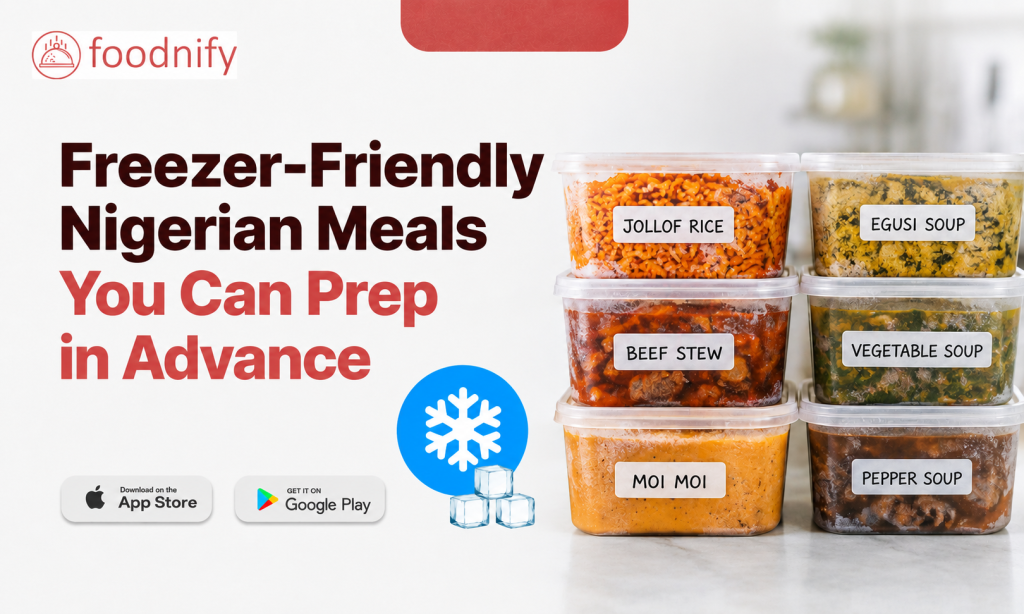
Nigerian soups are some of the best freezer-friendly foods in the world. Egusi soup, ofe onugbu, edikaikong, banga soup, ogbono, and vegetable stew all freeze and reheat with almost no loss in quality. In fact, many Nigerian cooks will tell you that frozen soup tastes better after thawing because the flavours have had time to develop.
Tomato stew base is another freezer staple. Make a large batch, freeze in meal-sized portions, and defrost as needed throughout the month. According to NHS food safety guidance, most cooked meals can be frozen safely for up to three months without significant quality loss.
Nigerian Proteins That Freeze Well
Cooked proteins freeze excellently and can be pulled from the freezer and added to soups, stews, or served as standalone meals.
Boiled or grilled chicken, fried fish, boiled beef, and cooked goat meat all freeze without losing texture or flavour. Freeze them in individual portions so you can defrost only what you need. This also prevents the waste that comes from defrosting a full batch and only using half.
How to Freeze Nigerian Food Properly
Freezing Nigerian food the wrong way leads to freezer burn, ice crystals, and meals that taste nothing like they should.
Always allow food to cool completely before freezing. Hot food placed directly into the freezer creates condensation inside the container and reduces the quality dramatically. Let it cool for at least thirty minutes at room temperature.
Use freezer-safe containers or heavy-duty ziplock bags. Remove as much air as possible before sealing. Label every container with the dish name and the date it was frozen. This helps you eat within the safe storage window and never forget what is inside.
For recipe ideas that batch cook and freeze perfectly, explore Foodnify’s recipe library.
Reheating Frozen Nigerian Meals
The best way to reheat frozen Nigerian meals is to thaw them in the fridge overnight before reheating. This preserves texture and flavour better than rushing a thaw on the countertop or in the microwave.
Reheat soups and stews on low heat on the stove, stirring gently as they come to temperature. Add a small amount of water if the consistency has thickened during freezing. For rice, add a tablespoon of water before covering and reheating to restore moisture.
Plan Your Freezer Prep With Foodnify
Foodnify’s AI meal planner helps you identify which meals to batch cook and freeze each week so that your freezer is always stocked with options. Pair this with the recipe library and you have a complete system for effortless Nigerian eating every day.
Conclusion
Freezer-friendly Nigerian meals are the long game of smart eating. Cook in big batches, freeze with intention, and buy yourself weeks of stress-free meals at a time. Start with egusi soup and tomato stew base this weekend.
CALL TO ACTION: Download the Foodnify app and plan your first freezer prep session with the AI meal planner.
NHS guidance on safe food freezing practices — https://www.nhs.uk/live-well/eat-well/how-to-eat-a-balanced-diet/food-safety-and-storage/
Foodnify AI meal planner (https://www.foodnify.com/meal-planner/) | Foodnify recipe library (https://www.foodnify.com/all-recipes/)