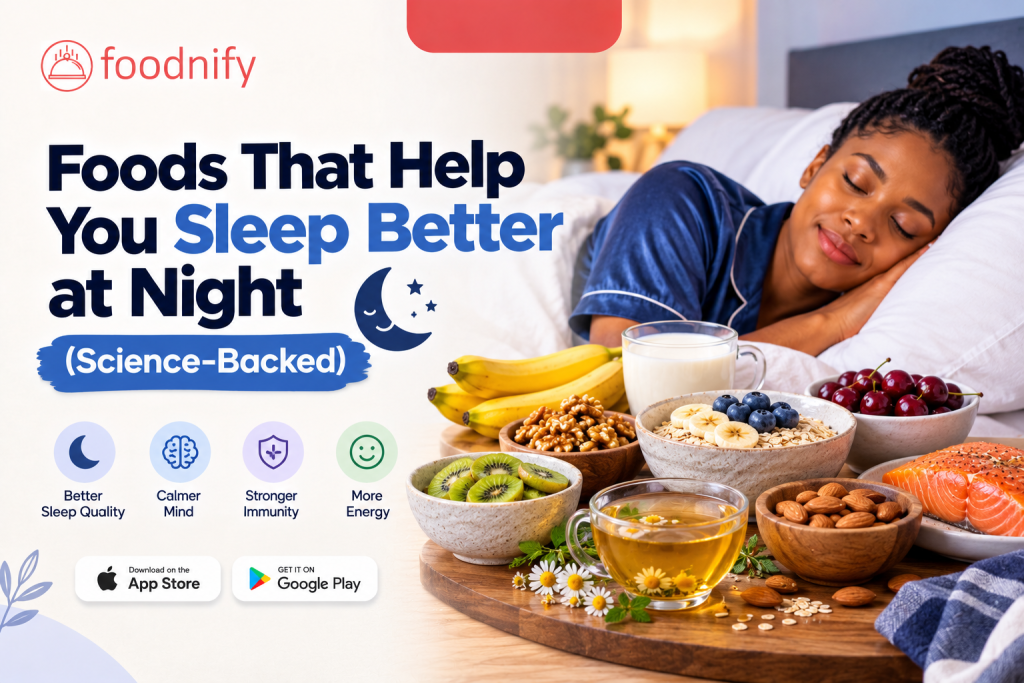
You can eat your way into a better night’s sleep.
That does not mean there is one magical food that will knock you out the moment your head touches the pillow. Sleep is influenced by many things — your stress levels, routine, environment, hormones, physical activity and even how much screen time you get at night.
But food matters.
What you eat in the evening can either support your body’s natural preparation for sleep or keep your digestive system working overtime when it should be winding down.
If you regularly struggle to fall asleep, wake up during the night or feel exhausted despite spending enough hours in bed, it may be time to look at what is on your dinner plate.
Here are some foods that help you sleep better, and the science behind them.
Tryptophan: The Amino Acid Behind Sleep-Supporting Foods
Tryptophan is an essential amino acid your body needs to produce several important compounds, including serotonin.
Serotonin can then contribute to the production of melatonin — the hormone that helps regulate your sleep-wake cycle.
This is why foods containing tryptophan are often associated with better sleep.
But there is an important point.
Eating tryptophan alone does not automatically make you sleepy. Your body needs the right nutritional environment to use it effectively.
This means your overall evening meal matters more than simply eating one “sleep food”.
Nigerian Foods Rich in Tryptophan
You do not need expensive imported foods to get tryptophan into your diet.
Several familiar Nigerian foods contain it.
Eggs are an excellent source of protein and contain tryptophan.
Beans are another useful option. They provide plant-based protein alongside fibre and other nutrients.
Groundnuts also contain tryptophan and healthy fats, making them a convenient evening snack when eaten in reasonable portions.
Turkey is well known for its tryptophan content, although it is not a staple food for many Nigerian households.
The lesson is simple: your local food basket already contains several foods that can support a healthy sleep routine.
You just need to use them wisely.
Magnesium-Rich Foods for Muscle Relaxation
Magnesium is another nutrient worth paying attention to when thinking about sleep.
It plays several roles in the body, including functions involving muscles and the nervous system. Adequate magnesium intake is associated with normal muscle and nerve function and may support healthy sleep patterns.
And again, you do not need to search far.
Look at your everyday foods.
Leafy green vegetables can contribute magnesium to your diet.
Pumpkin seeds are particularly rich in magnesium and can be added to meals or eaten as a small snack.
Bananas also provide magnesium, although they are not among the richest dietary sources.
The bigger picture is this: a balanced diet that consistently provides essential nutrients is more useful than searching for one miracle ingredient.
Your body needs nutrients. Give it enough of them.
Warm Milk: Does It Really Help You Sleep?
Warm milk has been associated with bedtime for generations.
But is there actually any science behind the tradition?
There is some nutritional logic to it.
Milk contains tryptophan, along with other nutrients. Drinking something warm can also become part of a relaxing bedtime routine, and routines matter because your brain learns to associate certain behaviours with winding down.
However, warm milk should not be treated as a sleeping pill.
The temperature itself is not some magical switch that turns off your brain.
The real benefit may come from the combination of nutrition, comfort and routine.
If a small cup of warm milk helps you relax without causing digestive discomfort, it can be a reasonable part of your evening routine.
The same principle applies to many foods that help you sleep: consistency and the overall quality of your diet matter more than one isolated food.
Foods to Avoid After 7pm
Sometimes the problem is not what you are failing to eat.
It is what you are eating too late.
Certain foods and drinks can interfere with sleep, especially when consumed close to bedtime.
Caffeine
Coffee is the obvious culprit, but caffeine can also appear in tea, chocolate, energy drinks and some other beverages.
Caffeine stimulates the nervous system and can remain active in the body for several hours.
If you are struggling with sleep, do not wait until bedtime to stop consuming caffeine.
Your afternoon cup may already be part of the problem.
Heavy Fried Foods
That plate of very oily fried food may taste amazing at night.
Your digestive system may disagree.
Large, fatty meals close to bedtime can cause discomfort, indigestion and reflux in some people, making it harder to sleep comfortably.
You do not necessarily have to eliminate fried foods completely.
Just think about timing and portion size.
Excess Sugar
A sugary snack may give you a quick burst of energy, but regularly loading up on highly sugary foods late at night is not a good sleep strategy.
Instead of turning bedtime into another opportunity for heavy snacking, choose a lighter, balanced option when you are genuinely hungry.
Your midnight cravings do not always deserve a midnight feast.
The Ideal Dinner Timing for Better Sleep
Timing matters.
Eating a very large meal immediately before bed can leave your digestive system working when your body should be preparing for rest.
For many people, finishing dinner around 2–3 hours before bedtime is a practical starting point.
For example, if you normally sleep at 10:30pm, consider finishing dinner around 7:30–8:30pm.
But there is no universal magic cut-off.
Your schedule, portion size, digestion and individual needs all matter.
The goal is to give your body enough time to digest before you lie down.
And remember: eating at 7pm is not automatically healthy if the meal is enormous, highly processed and overloaded with fat and sugar.
The quality of the meal still matters.
When building an evening routine around foods that help you sleep, think about three things:
What are you eating?
How much are you eating?
How close is it to bedtime?
Those three questions can completely change your evening eating habits.
Herbal Teas Like Chamomile and Hibiscus That Support Sleep
Sometimes the best evening drink is the simplest one.
Herbal teas can become part of a calming bedtime routine, particularly when they replace caffeine-heavy beverages or sugary drinks.
Chamomile tea is one of the most commonly used herbal teas for relaxation and sleep. Research has investigated compounds in chamomile, including apigenin, for their potential calming effects.
But be realistic.
Chamomile is not a pharmaceutical sleeping drug.
Think of it as a possible part of a relaxing routine rather than a guaranteed cure for insomnia.
Hibiscus tea is another popular option, particularly in Nigeria where zobo is widely consumed.
Hibiscus is rich in plant compounds and can be enjoyed as a caffeine-free beverage. However, if you are preparing it as an evening drink, be careful about adding large amounts of sugar.
A drink designed to support your evening routine should not become a sugar-loaded dessert.
And always remember: natural does not automatically mean risk-free. If you take medication or have a medical condition, check with a qualified healthcare professional before using herbal products regularly.
How Poor Sleep Creates a Negative Food Cycle
Here is where things get interesting.
Poor sleep can affect how you eat the next day.
When you are tired, your body can experience changes in hunger and appetite regulation. You may find yourself craving quick-energy foods, sugary snacks and highly palatable meals.
Then you eat more.
You feel sluggish.
You reach for more caffeine.
You stay awake later.
Then you sleep poorly again.
And the cycle continues.
This is why improving your sleep is not just about finding foods that help you sleep.
It is also about creating a healthier relationship between your sleep, food and daily routine.
A good night’s sleep can make it easier to make better food choices the following day.
Better food choices can support better health.
And a healthier routine can make good sleep easier to maintain.
Do not underestimate the power of the cycle.
How Foodnify Supports You Here
Knowing what to eat is one thing.
Knowing what to cook every evening is another.
That is where Foodnify comes in.
With Foodnify’s AI meal planner and recipe library, you can build practical meal routines around your needs, preferences and lifestyle.
Instead of asking yourself every evening, “What should I cook today?”, you can plan ahead and make better decisions before hunger and exhaustion take over.
From Nigerian favourites to healthier meal ideas, Foodnify helps make meal planning simpler.
Because healthy eating should not require you to think from scratch every single day.
| Sleep Foundation on the relationship between diet and sleep — https://www.sleepfoundation.org/nutrition/food-and-drink-promotes-good-night-sleep |
| Foodnify recipe library (https://www.foodnify.com/all-recipes/) | Foodnify AI meal planner (https://www.foodnify.com/meal-planner/) |
Conclusion
The best foods that help you sleep are not magic foods. They are nutritious choices — combined with sensible portions, good timing and a consistent evening routine — that can support your body’s natural preparation for sleep.
Start tonight: rethink your dinner, rethink your timing and give your body a better chance to rest. Build your sleep-supporting evening meal routine with Foodnify’s AI meal planner and recipe library.